Author: Fitzgerald Nissan Chambersburg Team
Given the value-focused mindset in our area and the typical 16-minute local commute, buyers in Chambersburg tend to prioritize affordable daily efficiency. In this market, we frequently see cost-conscious professionals choosing the all-electric Nissan LEAF to eliminate fuel costs along US-30 without sacrificing a quiet, comfortable cabin for unwinding after work. As fully battery-electric driving becomes more accessible, understanding how an EV fits into your regional routine is an essential first step.
At Fitzgerald Nissan Chambersburg, we have proudly served this community for years, building a strong reputation as a reliable, long-term automotive partner for drivers across Chambersburg and nearby Hagerstown, Martinsburg, Waynesboro, and Shippensburg. Our team's deep local knowledge and trusted experience mean you can count on our expertise in servicing and maintaining Nissan vehicles for the long haul.
Key Takeaways (TL; DR)
When navigating the shift to all-electric driving, buyers in Chambersburg often look for practical, proven solutions that fit shorter daily routes and budget-conscious households. What this means for local drivers is that going electric with a vehicle like the Nissan LEAF focuses heavily on simplifying routines and lowering long-term ownership costs. Here are the core highlights of adopting a fully electric Nissan.
- The Nissan LEAF Leads the Charge: As a purely electric pioneer, the Nissan LEAF delivers a quiet, responsive drive with zero tailpipe emissions. It provides a highly efficient electric footprint engineered for everyday utility, whether you are running errands near the Southgate Shopping Center or handling daily school drop-offs.
- Efficiency for Short Routes: Because Chambersburg is a net importer of jobs with a brief 16-minute average commute, local drivers frequently choose electric vehicles to maximize daily efficiency. A short commute means you can typically replenish your battery overnight, reducing daily reliance on public infrastructure.
- Eliminating Routine Engine Care: Fully electric models rely entirely on battery power and require no engine oil, meaning you skip traditional lube services. For example, skipping standard oil changes every 5,000 miles saves both time and roughly $50 to $100 per visit over the vehicle's lifespan, because a battery-electric powertrain has significantly fewer moving parts to maintain.
- Flexible Charging Capabilities: Most owners depend on a dedicated home setup for overnight power, though public charging access remains an option for longer trips toward Hagerstown or Shippensburg. Keep in mind that public fast-charging availability and actual charging speeds may vary based on station compatibility, your specific model year, and the type of port or adapter required.
- Meeting Value-Focused Demands: In this Cumberland Valley market, we frequently see customers choosing accessible electric models because regional median household incomes demand strong, predictable value. The stable cost of residential electricity compared to fluctuating gas prices offers long-term financial predictability for working professionals.
- Backed by Factory Protection: Transitioning to a new battery-electric vehicle is supported by Nissan’s standard 3-year/36,000-mile limited vehicle warranty, alongside specific long-term lithium-ion battery coverage on new models. This specialized factory backing provides essential peace of mind when adopting advanced electric technology.
Why Does Nissan Stand Out in Today's EV Market?
Nissan stands out in today's electric vehicle space because it pairs over a decade of mass-market EV manufacturing experience with everyday practicality. When you drive a fully electric model like the Nissan LEAF, you eliminate the need for traditional oil changes and enjoy instant torque without tailpipe emissions. This proven engineering makes a significant difference for drivers balancing quick 16-minute average commutes around Chambersburg with running errands along U.S. Route 30 near the Norland Shopping Center. Rather than experimenting with unproven platforms, Nissan builds on years of global battery data to ensure daily reliability. You can explore their ongoing electric innovations directly at Nissan's official site.
That legacy of innovation translates directly to confidence on the road, whether you are catching a performance at the Capitol Theatre or commuting down Interstate 81 toward Hagerstown and Martinsburg. Transitioning to electric means adapting to a new way to refuel, and public charging infrastructure is continually evolving. Keep in mind that access to public stations—including third-party networks—is always conditional and can vary widely based on your specific vehicle model, model year, port type, adapter availability, and station compatibility. By focusing on smart energy management and driver-centric design, Nissan ensures that adopting an EV enhances your daily routine rather than complicating it.
What Is Nissan's Electrification Strategy?

Nissan's strategy focuses on making pure electric driving accessible and highly practical for everyday routines, replacing traditional combustion engines with advanced, zero-emission battery technology. For drivers in Chambersburg and nearby Waynesboro, this means transitioning to an electric vehicle that easily handles the region's 16-minute average local commute without burning a drop of gasoline. Independent testing and automotive insights from organizations like Consumer Reports consistently show that adopting established electric platforms alters long-term ownership expectations. Most notably, because a fully electric vehicle relies entirely on battery power, you never have to schedule another traditional oil change.
Consider the typical weekly commute down U.S. Route 30: switching to a reliable electric car changes the math of your morning routine. Instead of detouring to a gas station in the winter cold, you simply wake up to a replenished battery, ready for the day ahead. This practical, human-centered approach to technology is exactly why Nissan focuses on straightforward battery-electric solutions.
Battery Electric Vehicles (BEV): Nissan’s all-electric approach centers on eliminating tailpipe emissions and vastly reducing mechanical maintenance. Models like the Nissan LEAF operate solely on electric motors paired with specific battery packs—typically available in 40 kWh or 60 kWh capacities. Because there is no internal combustion engine under the hood, these vehicles require zero oil changes and no spark plug replacements, while delivering exceptionally quiet, instant acceleration for your daily drives.
Public and Home Charging Realities: Moving to battery power means planning for your charging needs. While installing a Level 2 charger at home provides highly predictable overnight replenishment, public charging access remains strictly conditional. Plugging in at third-party stations down Interstate 81 toward Hagerstown depends heavily on station compatibility, the exact port type on your vehicle, and adapter availability. Access to expanding charging networks varies greatly by vehicle model, model year, and local station uptime, meaning drivers should plan regional trips around verified, compatible charging infrastructure rather than assuming universal access.
Everyday Ownership Support: Nissan engineers its electric vehicles to fit seamlessly into local Cumberland Valley lifestyles, whether you are running Saturday errands near the Norland Shopping Center or enjoying an evening performance at the Capitol Theatre. By prioritizing aerodynamic efficiency and standardizing advanced driver-assist features, the brand ensures the jump to an electric vehicle is predictable, safe, and genuinely enjoyable for Pennsylvania drivers.
Which All-Electric Models Are in the Current Nissan Lineup?
At present, Nissan’s fully electric roster is anchored by the Nissan LEAF. What this means for Chambersburg drivers is that you get a proven, zero-tailpipe-emission car perfectly scaled for navigating historic downtown streets or handling the typical 16-minute daily commute without using a single drop of fuel. Whether you are running weekend errands at Norland Shopping Center or heading to a performance at the Capitol Theatre, the LEAF delivers a quiet, efficient ride tailored to our local routines.
Because the Nissan LEAF is a 100% battery-electric vehicle, it skips the internal combustion engine completely. That simple fact means you never have to schedule another routine oil change, saving you both time and service costs over the lifespan of the car. Here is a closer look at a few specific engineering details that make this electric model a practical choice for Pennsylvania driving:
- One-Pedal Driving Capability: The standard Nissan e-Pedal system allows you to accelerate and decelerate using only the accelerator pedal. If you are stuck in heavier stop-and-go traffic along U.S. Route 30, this feature drastically reduces foot fatigue while simultaneously capturing kinetic energy to help replenish the battery.
- Stable, Confident Handling: By utilizing a heavy, floor-mounted lithium-ion battery pack, the LEAF maintains an exceptionally low center of gravity. This specific structural design provides a more planted, predictable feel behind the wheel when navigating wet roads during typical Cumberland Valley rainstorms.
- Flexible Charging Options: Recharging at home is straightforward, but public charging access remains conditional based on where you travel. Utilizing fast-charging stations near Interstate 81 will vary depending on your specific LEAF trim, its factory-equipped port type (such as the CHAdeMO standard), and the real-time availability of compatible third-party station adapters.
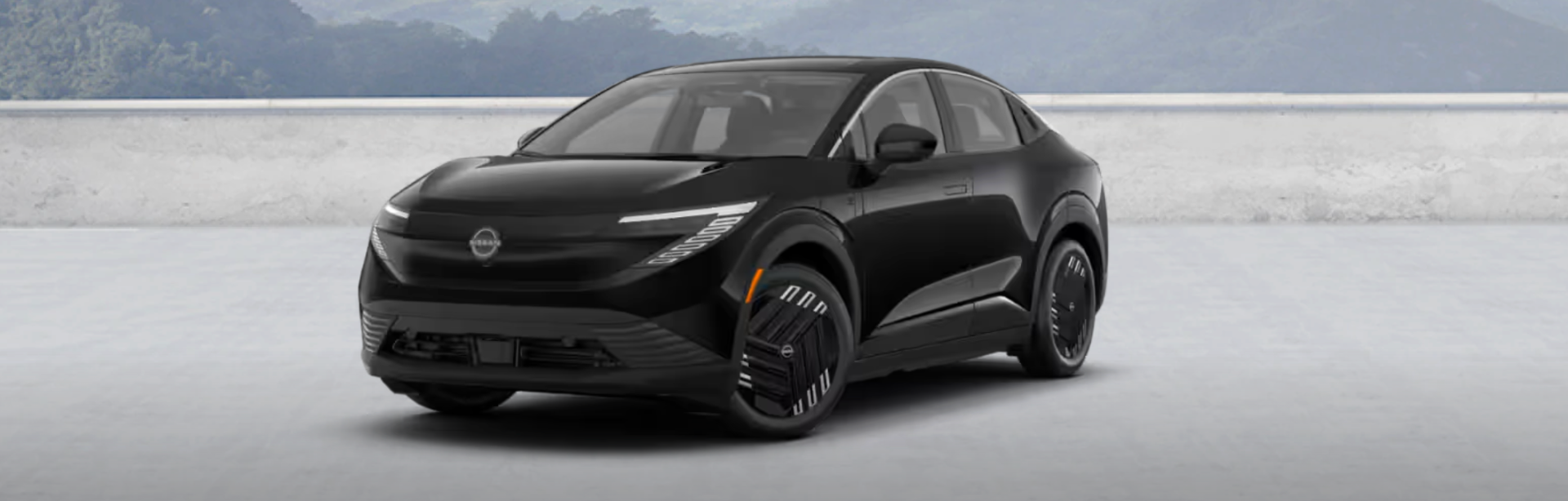
2026 Nissan LEAF
The 2026 Nissan LEAF continues to pioneer the accessible all-electric driving experience. It is a smart, fully electric vehicle designed for drivers who want the immediate cost-saving benefits of battery-electric power—meaning absolutely zero tailpipe emissions and no oil changes required—in a highly maneuverable format.
Design and Performance: Featuring a sleek aerodynamic profile and a surprisingly accommodating cabin, the LEAF makes daily errands simple and comfortable. Its electric motor delivers instant torque for confident acceleration when merging onto Interstate 81, while the nimble steering is perfect for navigating tighter intersections around Memorial Square. Because it runs purely on electricity, you get a whisper-quiet ride that enhances every trip, whether you are heading to a performance at the Capitol Theatre or picking up groceries.
Range and Charging: Engineered for everyday practicality, this electric car provides a reliable driving range that easily covers standard Cumberland Valley commutes. It supports convenient overnight home charging as well as faster top-ups on the road. Please note that access to public charging networks along U.S. Route 30 or beyond is conditional; compatibility can vary based on specific station infrastructure, your model's port type, and adapter availability.
Target Audience: The LEAF is a fantastic fit for Wilson College students, environmentally conscious commuters, and local professionals looking for a dependable daily driver. It handles short average local commutes beautifully, offering practical cargo flexibility for weekend relaxation near Conococheague Creek without the maintenance overhead of a combustion engine.
| Trim | S+ | SV+ | Platinum+ |
|---|---|---|---|
| Year | 2026 | 2026 | 2026 |
| Fuel Type | Electric | Electric | Electric |
| Drivetrain | FWD | FWD | FWD |
| EPA-Est. MPG City | 131 MPGe | 122 | 110 |
| EPA-Est. MPG Highway | 111 MPGe | 105 | 96 |
| EPA-Est. MPG Combined | 121–123 MPGe | 115 | 104 |
| Range | 303 miles | 288 miles | 259 miles |
| Engine | 160 kW AC Synchronous Electric | 160 kW AC Synchronous Electric Motor | AC Synchronous Electric Motor |
| Horsepower | 214 hp | 214 hp | 214 hp |
| Maximum Towing Capacity | 2,149 lbs | Not Rated |
How Does Nissan's Electric Technology Perform on Local Roads?
Nissan's fully electric technology is engineered to deliver instant torque, whisper-quiet operation, and simplified daily driving without burning a single drop of gas. The Nissan LEAF relies on an advanced lithium-ion battery pack paired with a synchronous electric motor, which means power is delivered to the wheels the exact second you press the accelerator. For Chambersburg drivers, this means merging safely onto Interstate 81 or navigating the afternoon traffic near the Norland Shopping Center is incredibly smooth and responsive.
Ever wonder why driving a fully electric vehicle feels so different in stop-and-go traffic? Because the Nissan LEAF utilizes regenerative braking technology—specifically the available e-Pedal—you can accelerate and decelerate using just one pedal in most everyday scenarios. If you commute the typical 16 minutes from Waynesboro into downtown Chambersburg via US-30, this single-pedal driving reduces foot movement and actively captures kinetic energy to help maximize your battery's efficiency before you even park near Memorial Square.
- Simplified BEV Maintenance: Because the Nissan LEAF is a Battery Electric Vehicle (BEV), it operates without a traditional internal combustion engine. That means no routine oil changes, spark plug replacements, or transmission fluid top-offs, significantly altering your long-term service schedule.
- Conditional Charging Access: The LEAF is designed for straightforward overnight charging at home, but public station access is not universally guaranteed. Access at third-party networks will vary greatly depending on the specific charging station's compatibility, your vehicle's model year, the port type equipped (such as CHAdeMO), and whether you have the proper adapter on hand.
- Integrated Connectivity: Inside the cabin, modern Nissan electric models feature standard tech like NissanConnect® with smartphone integration. This makes it easy to route your way to the nearest compatible charging station or queue up a playlist for a quiet evening drive to the Capitol Theatre.
How Well Do Electric Vehicles Handle Chambersburg’s Roads?

Chambersburg’s road layout and traffic patterns are exceptionally well-suited for electric vehicles like the Nissan LEAF. With the average local commute clocking in around a brief 16.5 minutes, an electric car easily covers the daily distance to local employers in healthcare, education, and retail without burning a drop of gas. Whether you are running errands near the Norland Shopping Center or navigating morning traffic on U.S. Route 30, the smooth, gearless acceleration of an electric motor makes stop-and-go driving far less stressful. Bypassing the gas station entirely also aligns perfectly with a value-focused budget, keeping your daily running costs low.
Our Cumberland Valley topography actively works to your advantage behind the wheel. Regenerative braking—a standard electric vehicle feature that captures kinetic energy to recharge the battery—excels when you are slowing down for the fountain at Memorial Square or descending the grades near South Mountain. For example, if you commute down I-81 toward Hagerstown or Martinsburg, simply easing off the accelerator on off-ramps feeds power directly back into your Nissan. This means those everyday regional drives help maximize your efficiency, ensuring you have plenty of battery capacity left for an evening out at the Capitol Theatre.
Pennsylvania’s four-season climate adds another layer of everyday convenience to electric driving. While winter weather near Conococheague Creek might make you hesitate, electric vehicles deliver immediate cabin heat since you do not have to wait for a traditional engine block to warm up. For drivers commuting to Shippensburg or Waynesboro on a frosty morning, a pre-warmed cabin and the immediate, controlled power delivery of an electric motor provide confident handling on slick roads. While cold temperatures can temporarily reduce your overall driving range and slightly impact public charging speeds, the everyday comfort of waking up to a vehicle that is fully charged at home makes winter mornings significantly easier.
What Is the Total Cost of Ownership for a Nissan EV in Pennsylvania?
When calculating the total cost of ownership for a Nissan EV in Pennsylvania, you need to factor in the purchase price alongside energy usage, insurance, and long-term maintenance. In most cases, making the switch to a fully electric model like the Nissan LEAF lowers your daily operating expenses. Because electricity prices tend to remain steadier than volatile gasoline costs, charging your vehicle overnight at home provides a highly predictable monthly energy bill. If you regularly commute via Interstate 81 or navigate the historic streets around Memorial Square, swapping weekly stops at the pump for routine home charging often smooths out your monthly transit budget.
Beyond energy savings, ongoing upkeep looks fundamentally different when you drive a battery-electric vehicle. Because a fully electric sedan like the Nissan LEAF relies entirely on an electric motor rather than an internal combustion engine, it requires absolutely no oil changes, engine air filters, or spark plug replacements. That means Chambersburg drivers spend less time in the service bay and more time enjoying the Cumberland Valley. Additionally, Nissan's e-Pedal and regenerative braking technology capture kinetic energy when you lift off the accelerator. This advanced system not only routes power back to the battery but also significantly reduces physical wear on traditional brake pads and rotors.
Actual charging expenses will naturally vary depending on your daily mileage, whether you use a Level 2 home setup, and current local utility rates across Franklin County. However, automotive valuation resources like Edmunds frequently highlight that the simplified mechanical architecture of electric vehicles translates to compelling long-term financial benefits. While your access to public charging stations depends heavily on connector types, adapter availability, and third-party network compatibility—especially if you are taking a weekend trip out past Caledonia State Park—establishing a consistent home-charging routine typically anchors your ownership costs nicely.
How Do You Charge Nissan EVs, and What Infrastructure Is Available?
Charging a battery-electric vehicle like the Nissan LEAF is straightforward and fits easily into a standard Cumberland Valley routine. You typically charge at home using standard or upgraded outlets, or utilize public charging networks while on the go. For short daily commutes to Wilson College or errands near the Southgate Shopping Center, many drivers start with Level 1 charging. This method plugs directly into a standard 120-volt household outlet and adds a few miles of range per hour. To speed things up, owners often install a 240-volt Level 2 home charger. This upgrade efficiently replenishes the battery overnight, meaning you can start every morning with a full charge for the day ahead.
When your schedule takes you beyond Chambersburg, such as a regional trip down Interstate 81, public infrastructure becomes essential. Public networks offer both Level 2 chargers for extended stops and DC fast chargers for rapid battery top-offs during highway travel. The Nissan LEAF features dedicated port designs engineered to accept this higher voltage, getting you back on the road sooner. You can typically locate active public stations and map out your power needs using compatible smartphone apps or the vehicle's built-in navigation system.
Keep in mind that public charging access remains conditional and is not universally guaranteed. Compatibility with third-party stations depends entirely on your specific model year, the vehicle's port type, and whether you possess a certified adapter. Furthermore, because automotive manufacturers do not control independent public networks, access to certain fast-charging stations may fluctuate. Always verify station availability and equipment compatibility before embarking on long-distance travel to ensure a smooth trip.
What Is the Ownership Experience Like for Nissan EVs?

Driving a fully electric vehicle like the Nissan LEAF fundamentally changes your daily routine by stripping away the noise and maintenance of traditional combustion engines. For folks navigating short commutes around Chambersburg—averaging about 16 minutes from neighborhoods near Wilson College to downtown—the ownership experience centers on everyday convenience and quiet comfort. Instead of scheduling weekend stops at the gas pump on U.S. Route 30, you're usually charging at home overnight, enjoying a simplified, relaxing ride perfectly suited for evening trips to a performance at the Capitol Theatre.
- Eliminating Engine Oil Changes: Because the fully electric Nissan LEAF relies entirely on a battery and electric motor, it completely drops the need for routine engine oil changes. Skipping a conventional fluid service every 5,000 miles vs. 10,000 miles noticeably changes the overall cost and time you spend waiting in a lobby over the years.
- Fewer Moving Mechanical Parts: Electric drivetrains eliminate hundreds of complex components associated with internal combustion engines, such as spark plugs, timing belts, and fuel pumps. This streamlined design can lower the likelihood of mechanical issues over the vehicle's lifespan.
- Regenerative Braking Wear Reduction: This system uses the electric motor to slow the car down, capturing kinetic energy to recharge the battery. By leaning heavily on the motor for deceleration, it often reduces friction on the physical brake pads, meaning they typically last longer than those on standard gas-powered sedans.
- Whisper-Quiet Operation: Without an engine vibrating under the hood, the cabin stays remarkably serene. That means less background noise when you're talking hands-free on Interstate 81 or simply enjoying a peaceful drive through the Cumberland Valley.
Nissan backs this modern ownership experience with robust manufacturer coverage, so you can drive with confidence. A new Nissan comes equipped with a 3-year/36,000-mile New Vehicle Limited Warranty alongside a 5-year limited powertrain warranty. When researching vehicle reliability, independent resources like Consumer Reports often emphasize the long-term peace of mind that comes from comprehensive factory protection. Plus, authorized service technicians are fully equipped to handle specialized electric diagnostics whenever your vehicle requires attention.
What Sets Nissan Electric Vehicles Apart from the Pack?
Nissan's approach to electric driving centers on proven dependability and straightforward daily usability. If you commute down U.S. Route 30 or navigate traffic near Southgate Shopping Center, you need an EV that handles real-world conditions predictably rather than just flashing novelty features. What this means for Chambersburg drivers is a smooth transition to electric power, backed by decades of automotive engineering. For example, because the Nissan LEAF uses a 100% electric powertrain, it completely eliminates the need for traditional oil changes—saving you significant time and service costs over 50,000 miles of driving.
Strengths:
- Extensive Electric Heritage: Nissan pioneered the mass-market EV space over a decade ago, gathering millions of real-world electric miles to continuously refine battery longevity and motor durability.
- Accessible Local Support: While startup brands often require long drives to regional hubs for basic repairs, owning a Nissan means you have access to established factory-trained technicians right here in the Cumberland Valley.
- Practical Cabin Technology: Features like the e-Pedal allow for seamless one-pedal driving, simplifying stop-and-go commutes near Wilson College or busy downtown intersections.
- Simplified Routine Upkeep: Fully electric models rely on fewer moving parts, allowing you to skip engine air filters, spark plug replacements, and traditional engine maintenance entirely.
- Adaptable Charging Integration: Public charging access varies depending on station compatibility, port types, and adapter availability, but compatible DC quick-charging hardware allows drivers to efficiently add range during regional trips along Interstate 81.
What Does the Future Hold for Nissan Electric Vehicles?
Nissan's development roadmap points toward advanced energy technologies, enhanced aerodynamic designs, and smarter driver-assistance software. What this means for Chambersburg drivers is the potential for improved driving ranges and faster charging times, making fully electric commuting along US-30 more practical than ever. As the brand continues to innovate, the focus remains on building electric sedans that blend real-world reliability with next-generation connectivity.
As of 2026, the pioneering Nissan LEAF—which first debuted in 2011—continues to showcase the benefits of fully electric driving, delivering immediate torque and requiring absolutely no oil changes since it lacks a combustion engine entirely. Looking ahead, Nissan is actively researching next-generation energy storage, specifically aiming to develop All-Solid-State Batteries (ASSBs). Because these solid-state units are engineered to offer roughly twice the energy density of conventional lithium-ion setups, they could drastically reduce charging times while improving temperature management. If you commute through the frosty winter elevations near South Mountain, this developing technology aims to deliver much more consistent range when the mercury drops.
Future electric models are also expected to integrate updated digital platforms, including advanced iterations of ProPILOT Assist and seamless over-the-air software updates. While public charging access currently varies widely depending on your specific vehicle model year, built-in port type, adapter availability, and individual station compatibility, Nissan is planning future architectures designed to streamline everyday charging. For local professionals driving down I-81 or families navigating the tight streets near Memorial Square, these ongoing engineering investments highlight a strong commitment to making zero-tailpipe-emission driving an effortless part of daily life.
Frequently Asked Questions (FAQs)
What should I expect regarding communication during the buying process?
Fitzgerald Nissan Chambersburg provides transparent communication from the start, offering personalized video walkarounds so you can easily shop from home for vehicles like the redesigned 2026 Nissan LEAF. Our team clearly explains the upfront "FitzWay Price" and provides a dedicated Spanish-speaking sales staff to ensure all our Franklin County neighbors feel comfortable. This approach makes finding a reliable vehicle for those quick 16-minute local commutes simple and stress-free.
How does Fitzgerald Nissan handle customer inquiries after a purchase?
Fitzgerald Nissan Chambersburg supports you long after the sale with our Lifetime Buyer Protection Plan, ensuring peace of mind for every drive down US-30. If you have questions while setting up a service visit, our team can arrange shuttle services or a complimentary car wash while you wait. We ensure that whether you are tackling South Mountain roads in winter or maintaining a daily routine, your ongoing needs are promptly addressed.
How does Fitzgerald Nissan Chambersburg ensure responsive customer service?
Our team operates out of a state-of-the-art facility completed in 2024, designed specifically to address your needs quickly and efficiently. While Fitzgerald Nissan Chambersburg services your vehicle for weekend trips to Caledonia State Park, you can take advantage of our complimentary snacks and Wi-Fi. We also offer prompt shuttle services so you can seamlessly return to your busy schedule or healthcare industry job without delay.
How does the staff at Fitzgerald Nissan Chambersburg ensure clear communication with every customer?
Because we operate under an employee-owned business model dating back to our 1955 heritage, every team member is personally invested in providing a welcoming, no-haggle buying experience. We provide clear details on our pricing and feature first-time buyer programs to assist a variety of shoppers. This ensures our cost-conscious local drivers can secure a great vehicle without any confusion.
What community programs does Fitzgerald Nissan Chambersburg support?
Fitzgerald Nissan Chambersburg is deeply rooted in the local community, supporting local schools, veterans, and environmental sustainability efforts across the Cumberland Valley. We also offer free child car seat safety inspections to help families safely navigate local routes and Interstate 81. Our team is proud to give back to the neighborhoods we serve every single day.
What amenities are available at the Fitzgerald Nissan Chambersburg dealership?
Our newly completed 2024 state-of-the-art facility offers complimentary snacks and Wi-Fi for you to enjoy while we review your vehicle needs. Fitzgerald Nissan Chambersburg also provides complimentary car washes and reliable shuttle services for your convenience. This makes it easy to keep your vehicle in top shape before heading out to a performance at the Capitol Theatre or shopping at Norland Shopping Center.
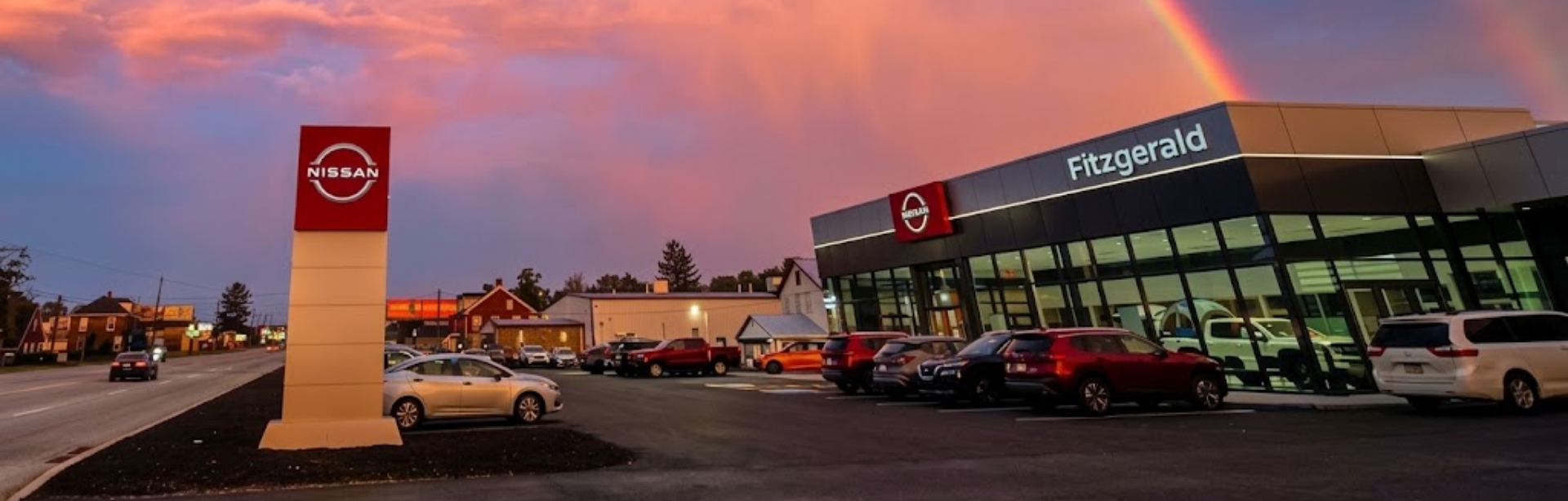
About Fitzgerald Nissan Chambersburg
At Fitzgerald Nissan Chambersburg, we take pride in our rich heritage since 1955, offering a unique, no-haggle buying experience through our employee-owned business model. As part of Fitzgerald Auto Malls, we are committed to transparency and customer satisfaction with our upfront "FitzWay Price" and the Lifetime Buyer Protection Plan, ensuring peace of mind long after you drive off our lot. Our state-of-the-art facility, completed in 2024, is designed to cater to your every need, from complimentary snacks and Wi-Fi to personalized video walkarounds and first-time buyer programs. We are deeply rooted in the community, providing free child car seat safety inspections and supporting local schools, veterans, and environmental sustainability. With services like complimentary car washes, shuttle services, and a dedicated Spanish-speaking sales team, we strive to create a welcoming environment for all our guests.